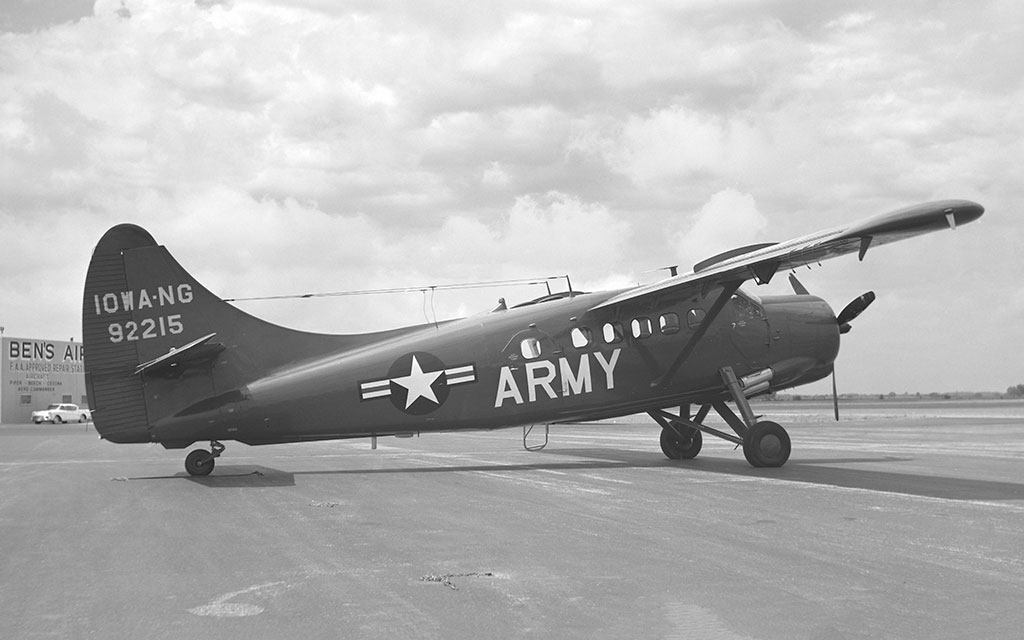
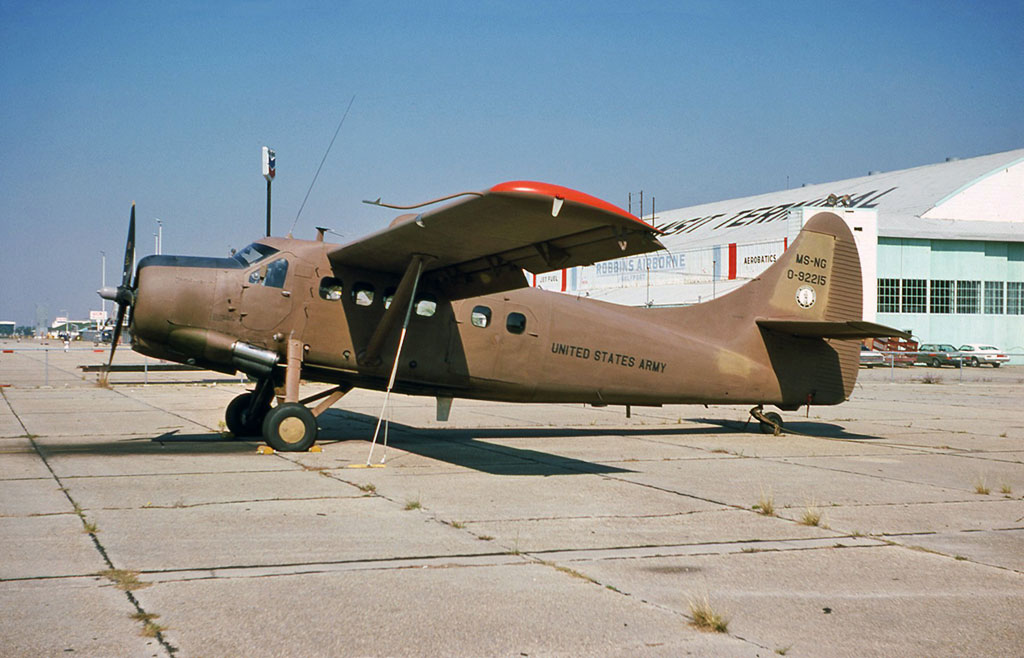
Otter 353 was delivered to the United States Army on 11 February 1960 with serial 59-2215 (tail number 92215). It was assigned to the 1063rd Aviation Company, an Army National Guard unit based at Boone, later Waterloo, Iowa and carried Iowa National Guard titles. In December 1966 it joined another Army National Guard unit (code WPZUAA) where it served until December 1971, when it joined the Florida National Guard. In 1973 it moved to the Mississippi National Guard where it served until February 1976, when it was delivered to Maxwell Air Force Base, Alabama on assignment to the Civil Air Patrol (CAP). It was formally transferred to the CAP on 24 February 1976 and registered to the CAP on 17 March 1976 as N5335G. After overhaul and converted to a civil aircraft, the CAP’s Director of Maintenance at Maxwell AFB., applied for its Certificate of Airworthiness, which was issued, showing a total time at that stage of 3,888 hours on the airframe.
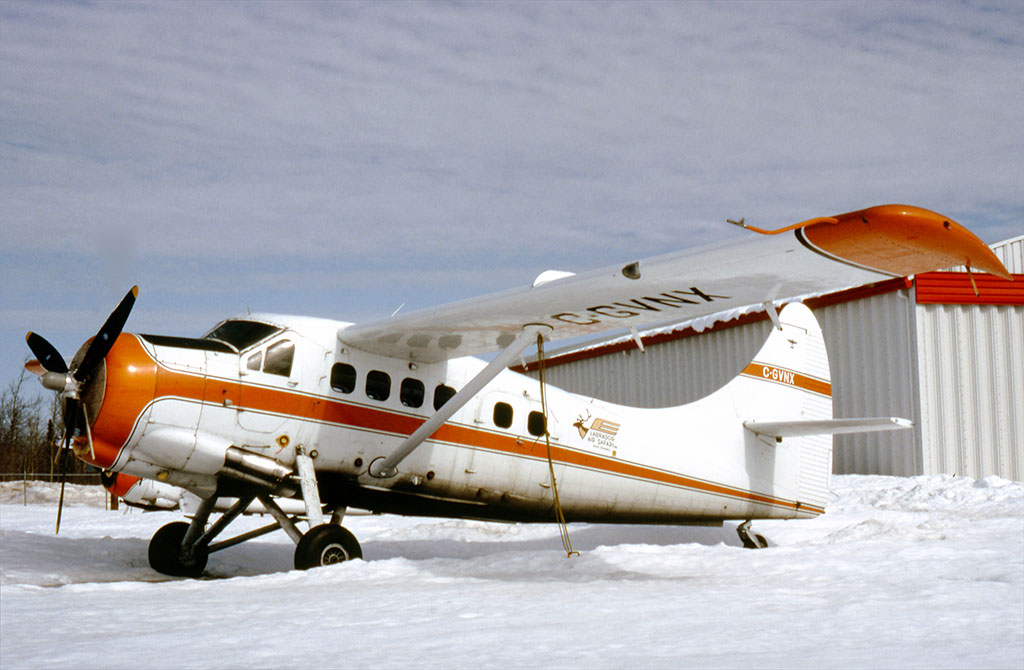
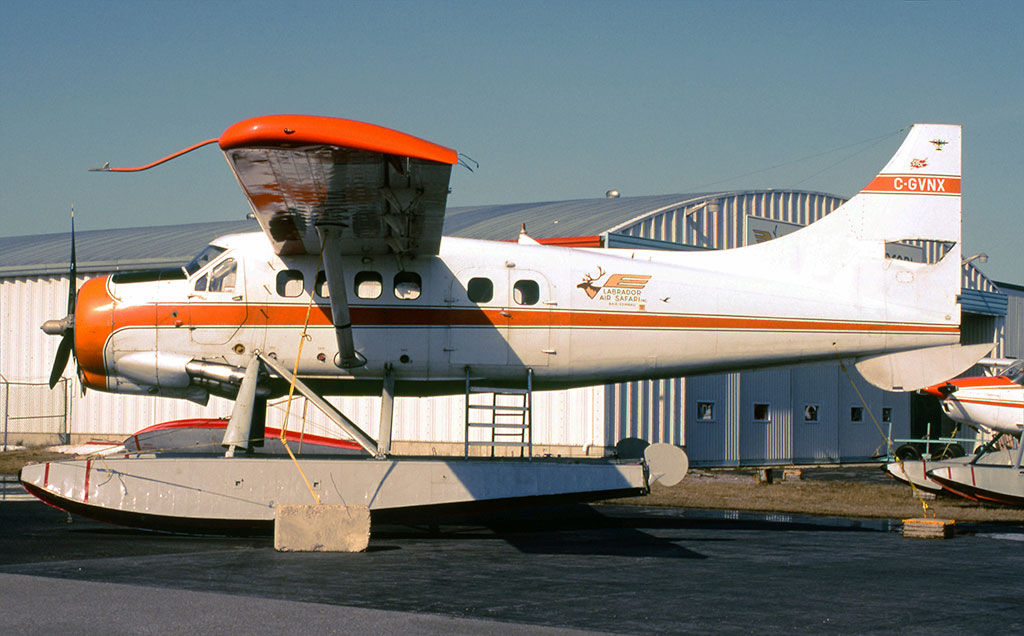
After flying for the CAP for two years, the Otter was sold in Canada. Registration N5335G was cancelled on 28 April 1978 and on 18 May 1978 a Temporary Flight Permit was issued to St.Louis Aviation Inc., Hangar 2, St.Jean Airport, Québec and registration C-GVNX was allocated. St.Louis Aviation was a company which specialised in refurbishing, rebuilding and repairing Otters. The aircraft was formally registered the following day to Labrador Air Safari Inc., of Baie Comeau, Québec and after overhaul joined their fleet in time for the summer 1978 season. It joined the company’s Otter C-GLJI (150), some Beavers and Cessnas. From its base at Baie Comeau, Labrador Air Safari flew fishermen and hunters into the Québec bush country. The company operated a number of fishing lodges within a 300 mile radius of Baie Comeau. Colour scheme for the Otter was a tasteful white fuselage with an orange cheatline and tail band and company titles.
Otter VNX was involved in an incident on 5 September 1978 at Wabush Lake, Newfoundland. While carrying out an approach for a water landing, the Otter struck power lines and sustained some slight damage. The lines were not marked, although one of the two towers was lighted. The pilot was unfamiliar with the area and the information in Canada Air Pilot water supplement was incomplete. The damage was repaired and VNX returned to service. The company continued to expand its Otter fleet until it had six aircraft. The company was re-constituted as Labrador Air Safari (1984) Inc, to which all the Otters were registered.
VNX continued to serve with Labrador Air Safari for many years. It is mentioned in a CADORS report for 29 July 1993. Twenty minutes north of its base at Baie Comeau, on a VFR flight, the Otter found itself in cloud at 2,800 feet. It was given a radar service and came out of the cloud five miles north of the base and was guided in for landing at the water aerodrome. On 9 March 2010 the Otter was registered to Air Saguenay (1980) Inc when Labrador Air Safari (1984) Inc., became a subsidiary of Air Saguenay. The Otter however continued to fly from Baie Comeau with Labrador Air Safari colour scheme and titles.
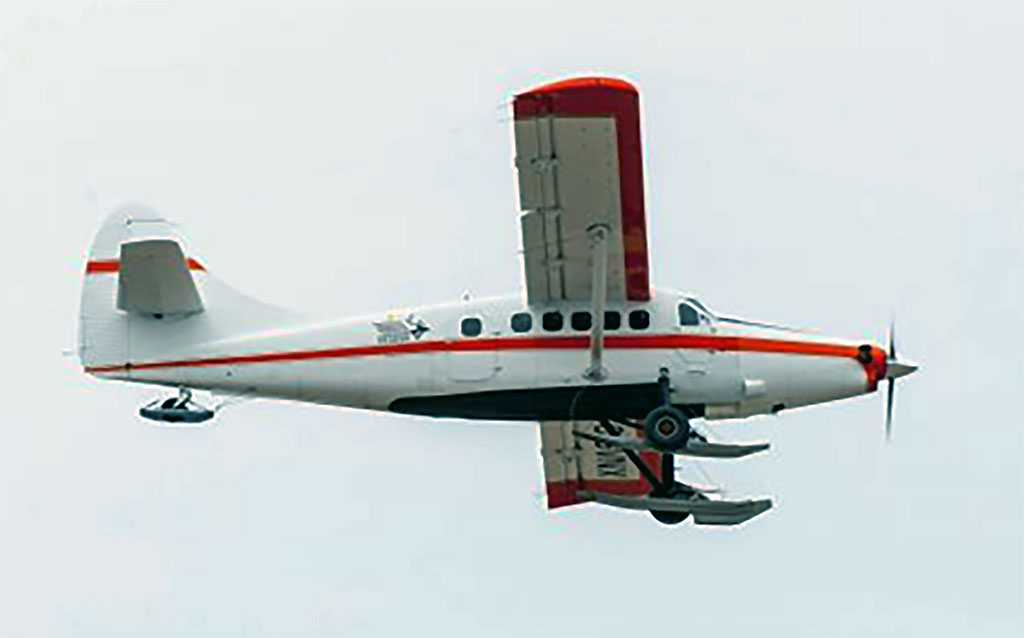
On 1 March 2012 VNX was noted at the Aeroflite Industries hangar at the Vancouver International Airport, having flown across the country for turbine conversion. It remained parked there for a time, noted again on 18 April still with its piston engine. After that it entered the hangar and had emerged by 19 June 2012 converted to a Vazar DHC-3T with a PT6A-34 engine. It was still in full Labrador Air Safari scheme and shortly after that flew back to its base at Baie Comeau where it was in service for summer 2012 as a turbine. It was mentioned again in a CADORS report on 18 December 2012, its ELT having accidently gone off at Baie Comeau.
Another incident was recorded on CADORS for 6 June 2014. An Aviation Flycie Beech 100 callsign FC342 from Rouyn-Noranda to Baie Comeau was on final for runway 10. Otter VNX, on amphibious floats, had taken off from Lac Gibier and had received information on the Beech 100. FC342 reported that VNX flew in front of the runway centreline. VNX reported that he had forgotten about the other aircraft.
As at summer 2017 C-GVNX was still in service with Labrador Air Safari, nearly forty years after it first joined the company. It was, as usual, in winter storage over the winter of 2017 / 2018, awaiting he summer 2018 season.
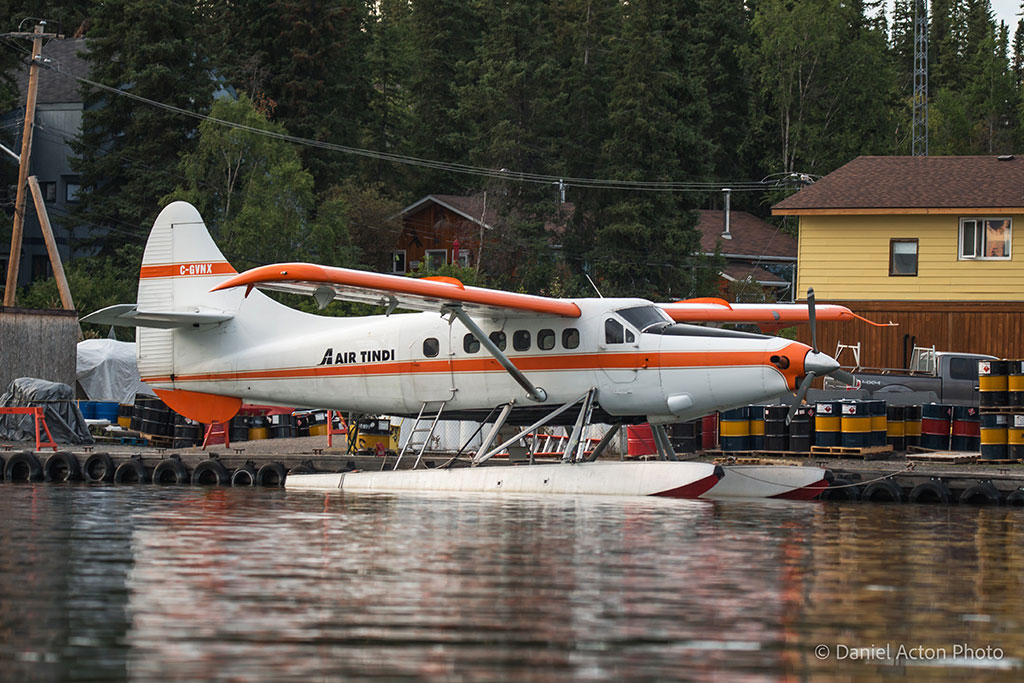
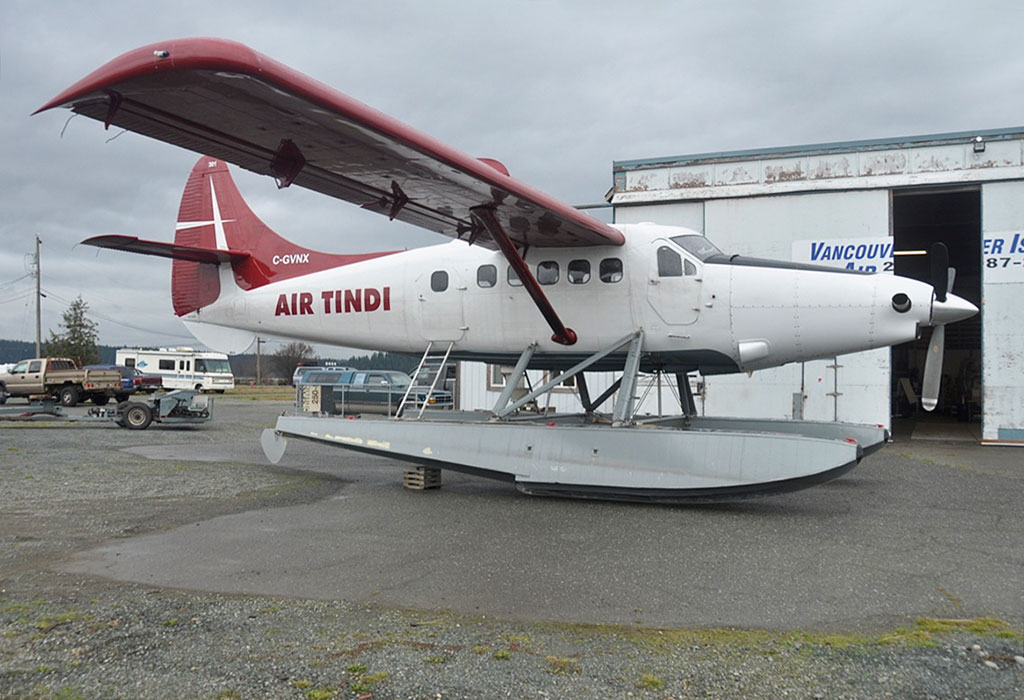
Noted with Air Tindi operating from Yellowknife, September 2022. New livery noted 03-Nov-2023.
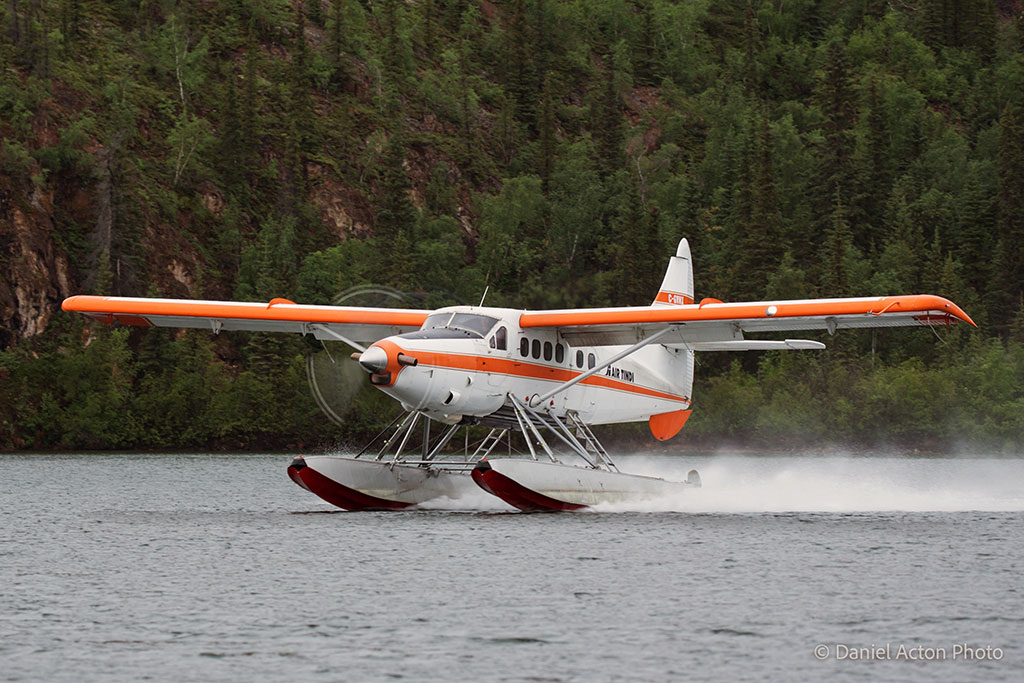
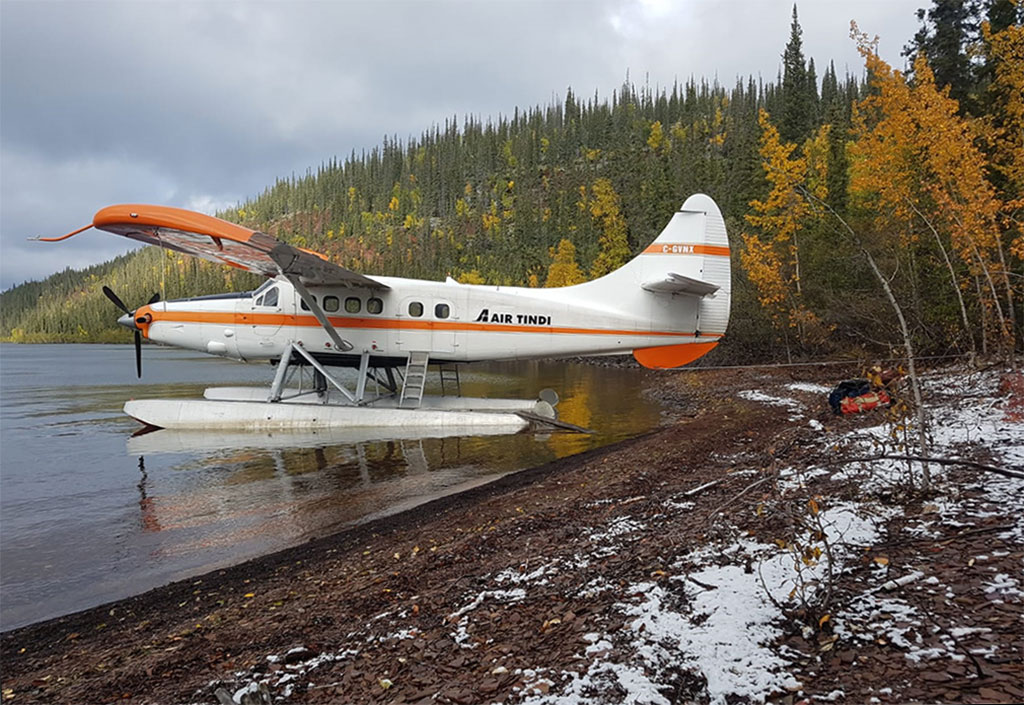
C-GVNX continued to fly for Labrador Air Safari in the years that followed, serving the Québec bush country. However on 21 May 2018 it arrived at Yellowknife, Northwest Territories, having been purchased by Air Tindi, to whom it was registered on 30 July 2018. It was still in its white and orange colour scheme but carried Air Tindi titles and logo on the side of the fuselage. It was operated on floats. It was mentioned in a CADORS incident on 6 August 2018. Air Tindi Otter callsign TIN 301, on departing from the Yellowknife water aerodrome had a radio failure that caused interference with frequency 118.5 so that the Tower experienced radio failure as well for a time. During July 2019 it was noted flying from Kugluktuk in Nunavut, still in basic Labrador Air Safari scheme with Air Tindi titles. It continued to fly for Air Tindi in the years that followed.
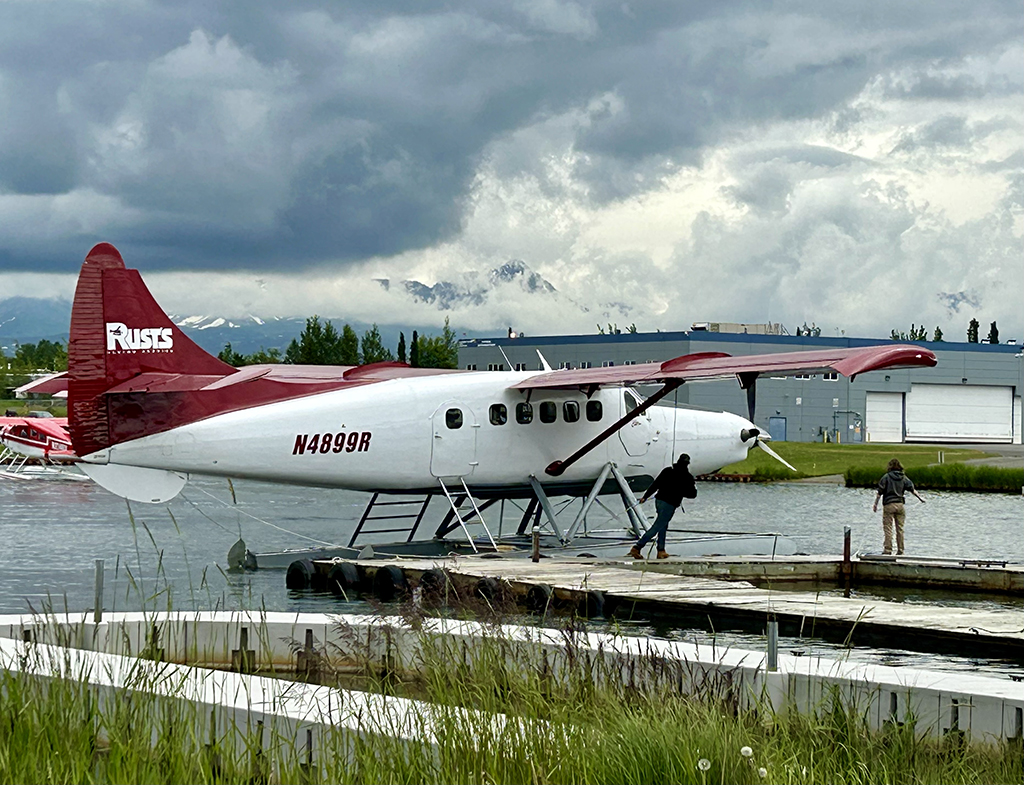
C-GVNX was with Vancouver Island Air at Campbell River, BC over the winter of 2023 / 2024 where it was overhauled and repainted into full Air Tindi scheme of white fuselage with red wings and red tail, Air Tindi titles and fleet number 301. It was noted at Pitt Meadows, BC., on 2 May 2024 and resumed service with Air Tindi out of the Yellowknife base for summer 2024. It continued flying for Air Tindi until sold to Rustair Inc., of Anchorage in March 2025. It was put on wheels for the delivery flight, its floats being trucked to Anchorage. C-GVNX flew from Yellowknife to Whitehorse on 26 March in 6 hours 31 minutes flying time, continuing on to Anchorage the next day, flying time 3 hours 34 minutes. It was registered as N4899R to Rustair Inc., on 21 May 2025.
Full history up to 2005 courtesy of Karl E Hayes © from DHC-3 Otter - A History (CD-ROM 2005), now with added and updated information which Karl has supplied for the benefit of the website.

 click on arrows to navigate page by page